
Latest News

Archive
It's for the Red River Valley and Western Railroad.


-
 Five probable cases were reported in Rock County. It's the third cluster of cases in Wisconsin unrelated to the outbreak in the southwest region.
 -
 Two men were found dead in an apartment in Fargo last month.


Latest Podcasts and Featured Stories

Christoffer A Rasmussen
/
Public Domain
When you think of the sights and sounds of fall in North Dakota, flocks of snow geese and other waterfowl overhead come to mind, as do the leaves changing color. But one thing that's often overlooked are the large flocks of red-winged blackbirds that swoop and swirl over sunflower fields and other areas.


Main Street
-
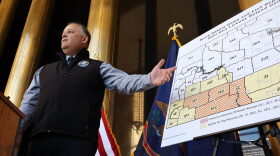 Hunters face deer season changes amid EHD; lawmakers weigh data center rules; George Peck examines Tesla’s flying Roadster; Tom Isern recalls prairie Halloween mischief.

Dakota Datebook
-
 In December 1930, when the original Capitol building burned, many people turned out to watch. Some, however, came to save what they could. Secretary of State Robert Byrne was one of those who joined in the heroics. He broke a window into his office, cutting his hand on the glass and singeing his hat. Inside, he opened the storage vault and rescued the original state constitution, which luckily suffered no damage. Without his efforts, the constitution might have been lost or damaged, as happened to records from some other state agencies. His quick thinking saved this founding document.


Each Friday on A Closer Look with the Monitor, Prairie Public's Craig Blumenshine speaks with North Dakota Monitor journalists about their reporting, giving listeners a closer look at major topics in the news, from education and state policy to energy and agriculture topics.
News from NPR

Kin Cheung
/
AP
Kane was followed in the voting by Kylian Mbappé. Spain star Alexia Putellas won her third women's Ballon d'Or. Outside, fans packed the streets and climbed light poles near the London Palladium.


-
 A localized ceasefire between Ukraine and Russia took effect early Tuesday ahead of a humanitarian mission brokered by U.S. first lady Melania Trump, as missile attacks resumed in Kyiv.
 -
 President Trump campaigned Monday in Mississippi, as he continued a closing midterm rally blitz that has highlighted Republicans' challenges ahead of an election that could drastically shift power in Washington.


Stories from the Upper Midwest Newsroom


Mary Conlon
/
Wisconsin Public Radio

Tadeo Ruiz Sandoval
/
MPR News