

Chuck Lura has a broad knowledge of "Natural North Dakota"and loves sharing that knowledge with others. Since 2005, Chuck has written a weekly column, “Naturalist at Large,” for the Lake Metigoshe Mirror, and his “The Naturalist” columns appear in several other weekly North Dakota newspapers.
Lura was a long-time biology professor at Dakota College at Bottineau, publishing research on ecological aspects of grasslands in the northern Great Plains. In retirement, he continues to share his Natural North Dakota essays for the Prairie Public audience.
—
Natural North Dakota is supported by NDSU Central Grasslands Research Extension Center and Dakota College at Bottineau, and by the members of Prairie Public. Thanks to Sunny 101.9 in Bottineau for their recording services.
Hear Natural North Dakota on Prairie Public on Saturdays and Sundays at 8:35am CT.
-
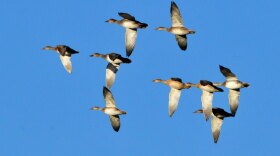 It is the sights and sounds of waterfowl overhead that perhaps best exemplify fall. Biologists have long recognized predictable seasonal migrations of birds from their breeding grounds to non-breeding grounds, or what we would generally refer to as wintering grounds. They have also come to recognize four basic routes or flyways for migratory waterfowl in North America.
 -
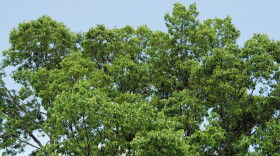 Hackberry is a medium to tall tree that grows to between 40-60 feet. It ranges roughly east of a line from North Dakota south to Oklahoma. In North Dakota it has been documented in most counties in the eastern half of the state and would probably be listed as occasional.
 -
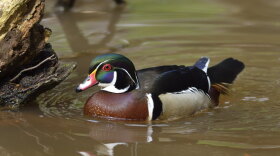 Have you ever noticed that some ducks get up from the water quickly and easily while other have to paddle away for a considerable distance before getting airborne? Ducks can be categorized in two groups, puddle ducks (aka dabbling ducks) and diving ducks. The differences between these two groups relate to how they look, fly, and eat.
 -
 There are three types of prairie, and in North Dakota, the tallgrass prairie historically dominated the Red River Valley. As the name implies, the tallgrass prairie was dominated by tall grasses that grow to three feet or more. Historically the tallgrass prairie has been estimated to have covered between 140-170 million acres, but I have seen estimates that only 1-4 percent remains.
 -
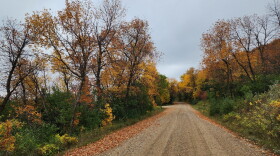 North Dakotans have endless opportunities to get out and enjoy nature, and those opportunities are not restricted to summer.
 -
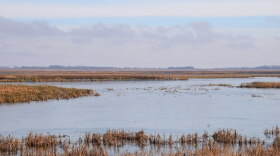 Most North Dakotans are well aware of the rich soils of the Red River Valley, what was once glacial Lake Agassiz. Although less well known, glacial Lake Souris also has rich soils. It covered much of Bottineau and McHenry counties as well as portions of Rolette and Pierce counties.
 -
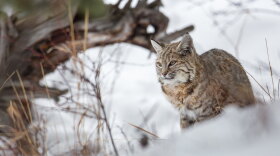 Have you ever seen a bobcat? If so, I suspect you are among the few North Dakotans that have. It might come as a surprise to learn that they reside in the state, particularly in the west.
 -
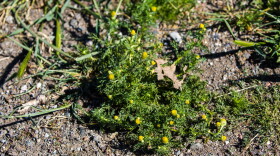 When you look near barnyards, roadsides, or other disturbed areas this time of year, you may notice a low-growing weedy plant with finely divided leaves, and a yellowish-green flower head. I suspect most people dismiss this plant as just another weed, but its common name pineapple weed, or perhaps wild chamomile, indicates something a little different.
 -
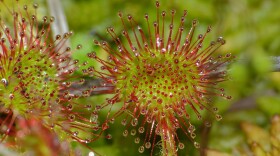 Dveryone has heard of the Venus flytrap, but North Dakota's Turtle Mountains is home to a different carnivorous plant — the round-leaved sundew.
 -
 The goldenrods are starting to put on their annual floral show. Much as the pasque flowers in bloom serve as harbingers of spring, the goldenrods are harbingers of fall. They are telling us that the days of summer are numbered and fall is fast approaching.


