

After bison were nearly driven to extinction in the late 1800s, Native nations across North America have been working to restore them to their ancestral lands. Recently, a nonprofit based in Porcupine celebrated a significant milestone in its own bison reintroduction efforts.
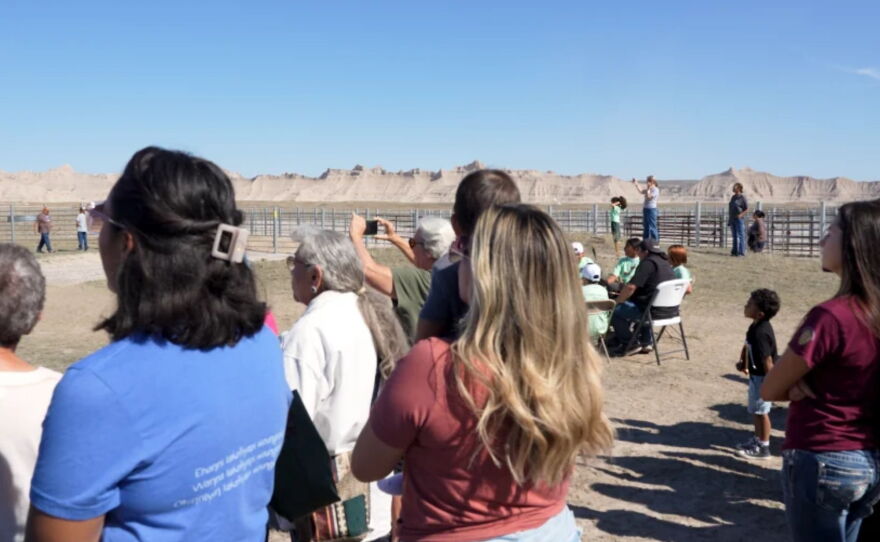
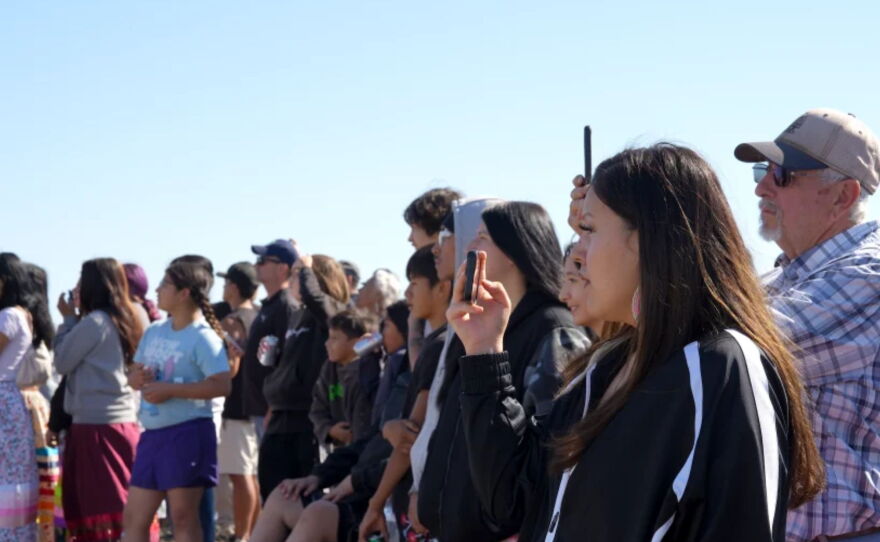
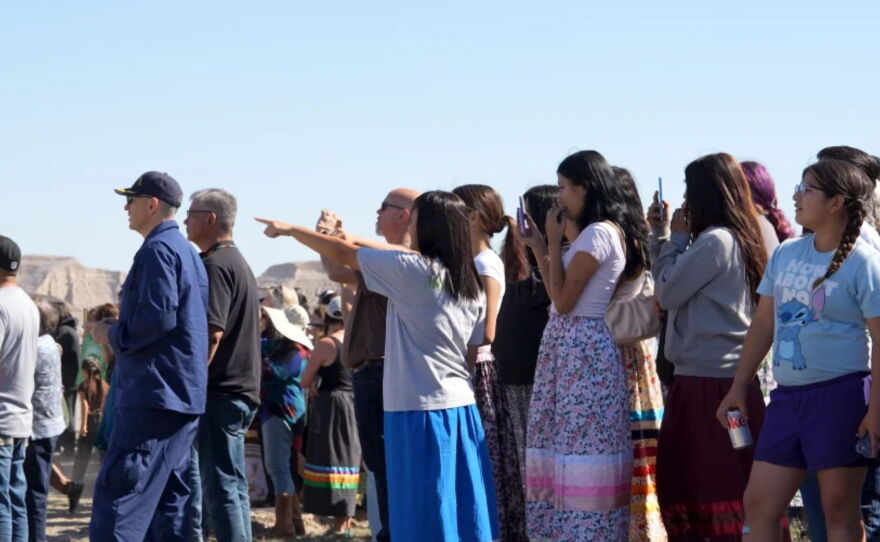
Close to three hundred people gathered in the badlands to witness the historic release of a herd of 50 bison into one of the largest range units on the Pine Ridge Reservation. The organization behind the release that's working to restore bison to this culturally significant area is a nonprofit called Thunder Valley Community Development Corporation, or CDC. The nearly 40,000-acre space where the herd now roams is being leased on land owned by the Oglala Sioux Tribe in the O'onak̄ijiŋ, or Stronghold, area.
Brandon Big Eagle is the Lakota Land Systems Director for Thunder Valley CDC. He said this part of the badlands was formerly used as a bombing range by the U.S. military.
"So I like to share the history of this land too, as one that's experienced its own trauma through bombings and target practices that happened out here," said Big Eagle. "We can see a lot of that scarring traveling through here. And so what better place can we start than here in that reintroduction?"
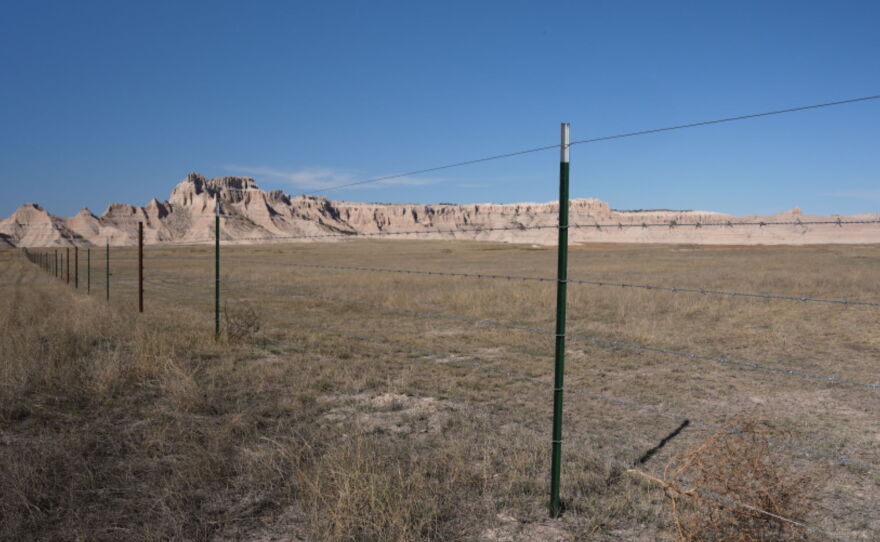
Preparation of the range unit included adding miles of wildlife-friendly fencing, which Jorgensen said is important to maintain wildlife connectivity on such a large tract of land.
"World Wildlife Fund worked with Thunder Valley to develop a request for proposals, a request for bids, to ultimately build all of this, and there were a few key groups that were great in surveying the landscape, understanding where the fences needed to be built, what materials they were dealing with," said Jorgensen. "This is badlands soils, which is really difficult to build fence and to ensure that the fences are going to stay up because the badlands are always shifting, eroding."
One of those key groups was Fulton Ag LLC, which assisted with installing roughly 27 miles of buffalo fencing, as well as the corral and handling facility. Additionally, Thunder Valley CDC worked closely with UXO teams to ensure the ground was free of unexploded ordnance.
They also gave the range unit a two-year resting period that included annual rangeland health assessments to gather baseline data on grasses, forbs and soil structure. Big Eagle said these assessments are useful to understand grazing capacity, as well as provide a starting point for tracking change annually now that the bison are reintroduced.
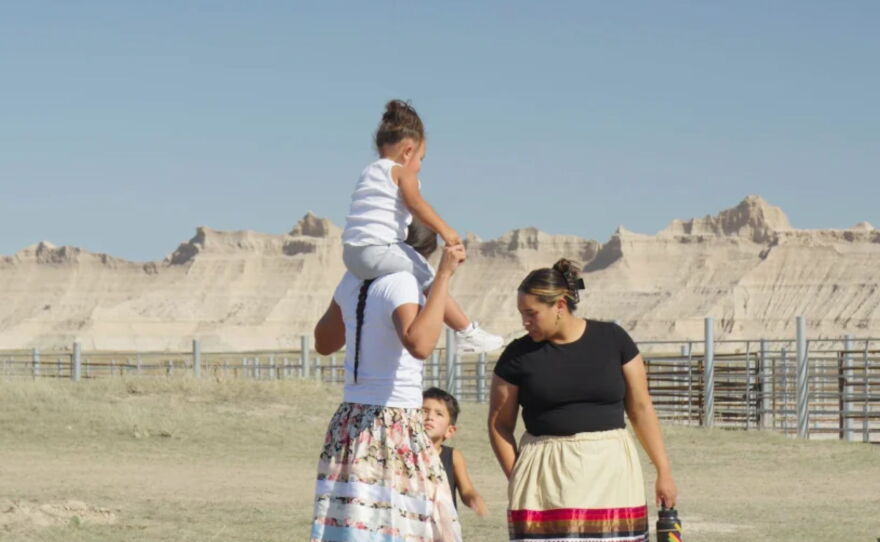
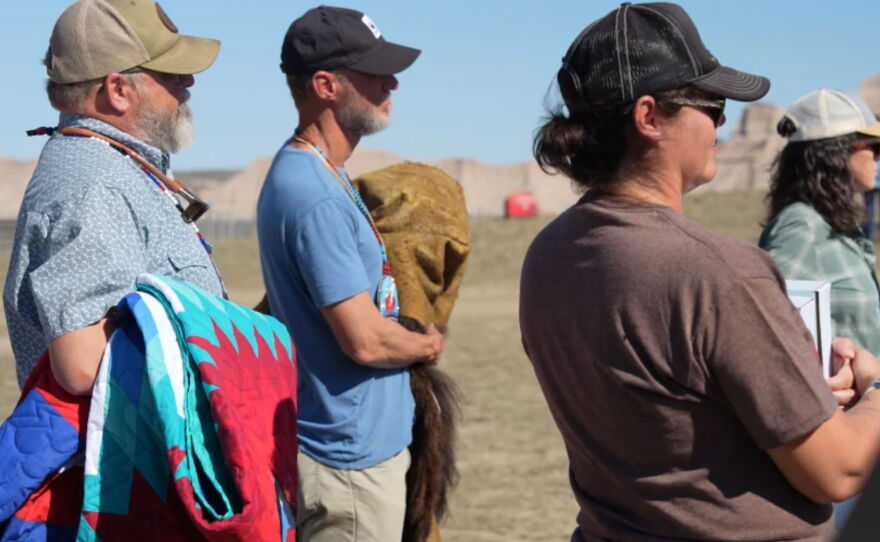
Beyond grassland and ecological conservation, Thunder Valley’s bison restoration initiative is also intended to strengthen the community’s connection with their relatives, the Pté Oyáte, or Buffalo Nation.
"Historically, they play a huge significance within the Indigenous Plains tribes here in this area, and I'm sure many other tribes," said Big Eagle. "But for us, it's part of our creation stories. So our people, we began in what is now Wind Cave and the first of our relatives, the Lakota people to emerge from Wind Cave, when they came out that’s the form that they took on was buffalo. And so when we reference them as relatives, we mean it. They truly are relatives in every aspect that we can see."
Many who attended the bison release were youth from local schools. Beau LeBeaux is a Founder and Board Chairman of Thunder Valley Community Development Corporation.
"We want to get our young people to understand that those are relatives, and they'll take care of us if we take care of them," said LeBeaux. "And reestablish that connection, not only to survive, but there's a lot of lessons that buffalo can teach us, have been trying to teach us. We just lost that for a bit because they were slaughtered, taken away from us. And I'm so thankful for organizations across the country that are fighting to return buffalo to their lands."
LeBeaux said empowering younger generations has been central to Thunder Valley's mission from the very beginning.
"There's all kinds of things that I consider Thunder Valley to be," said LeBeaux. "One of the main things is a proof point for our people, for our young people, especially our young people. When we first started, one of our goals was to show our young people, our children, our grandkids that you can do things. We can get things accomplished here, despite whatever's going on. Put your minds to it. You have the strength and the courage to make a change."
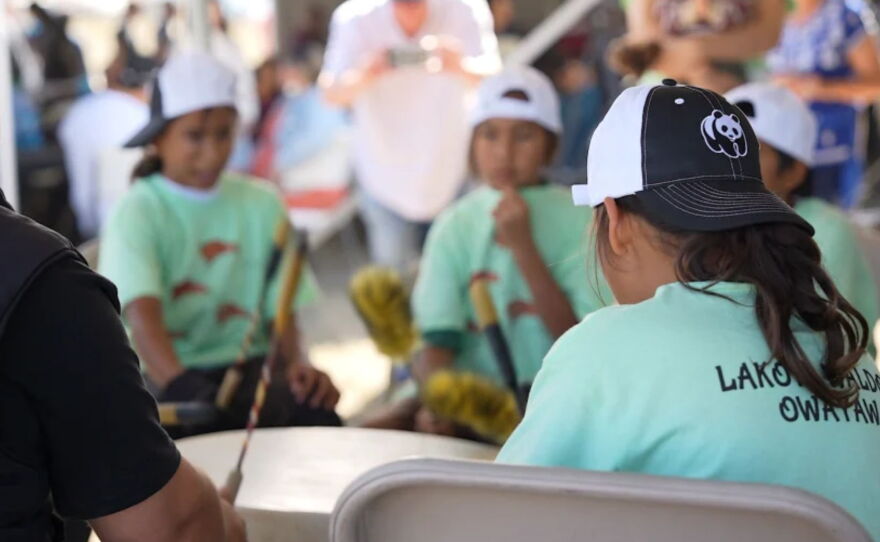
Thunder Valley CDC is exploring different avenues to strengthen the community's connection to the bison, the land and vice versa, according to Big Eagle. Ongoing herd management also presents valuable career development opportunities.
"As Lakota people, we have a different stance and ideology on what youth is," said Big Eagle. "And so we're talking from the traditional standpoint of newborns on up, but we extend it to at least 26 in most instances, even 30 I've seen in others. And so in some of those older age ranges where we're connecting 18- to 26-year-olds is through our workforce development program, as they'll have hands-on training and management out here as well. So that as they're preparing themselves to enter the workforce, South Dakota is very huge on agriculture, on ranching. And so this is one avenue that we can help prepare them for that. So that they can help on different ranches or even possibly own their own in the future."
Big Eagle said the bison release event was not only a powerful experience for the people who attended it, but also a significant occasion for the animals themselves.
"It's such a beautiful moment, not only for us, for our people, for our communities. A lot of people traveled from far and wide to be here today. It's the feeling and experiencing that connection with the buffalo," said Big Eagle. "Also trying to place myself in their minds and what that means to them to be able to come back to something that their ancestors may have called home at one point, an area that they historically have not been able to return back to. And continuing to pray for the buffalo themselves, that we're able to meet their needs. And honor that homecoming for them as well. This day is as much of their day as it is ours."
The 50 bison that Thunder Valley released came from the Wolak̇ota Buffalo Range on the Rosebud Reservation, which is home to the largest Native-owned bison herd in the world. Going into the future, Thunder Valley CDC plans to reintroduce more bison and expand the herd on the O'onak̄ijiŋ range unit.
The Upper Midwest Newsroom is a public media collaboration between Wisconsin, North and South Dakota, and Minnesota, made possible by the Corporation for Public Broadcasting.


