
From the founding of the United States, Native communities have faced displacement, broken treaties, and the ongoing struggle to preserve their identity and sovereignty. Those tensions remain felt today.
At the Standing Rock Reservation, students share their perspectives on history, representation, freedom, and the lasting impact of the Dakota Access Pipeline protests — offering an unfiltered look at how Native youth see their place in America.
Full Transcription
TAY CALLOWAY (HOST):
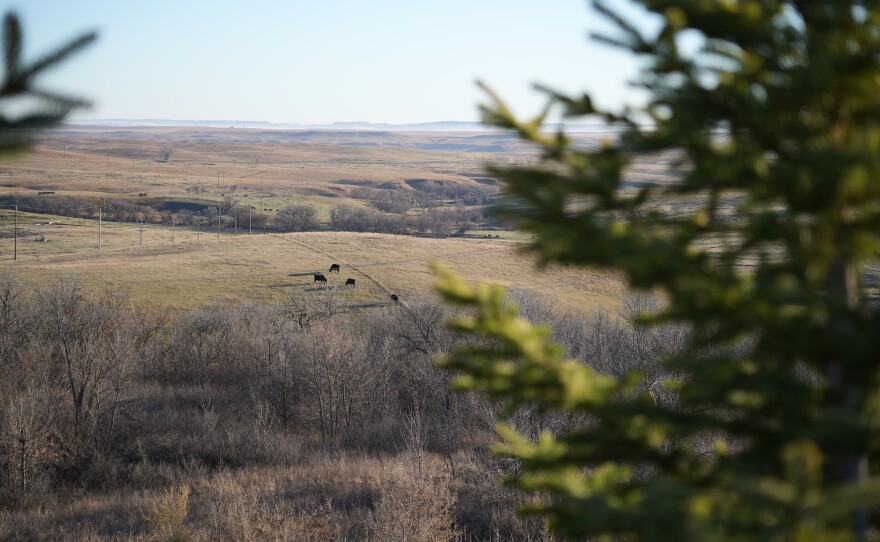
For the past fourteen years, Prairie Public has been visiting the Standing Rock Reservation, which is an hour’s drive south of Bismarck, North Dakota.
There, the grass melds into the land, folding on top of itself like a crinkled curtain rolling into the sky. Surrounded by a want of coexistence, openness, and honesty. All of which the land expects the same from you.
It’s breathtaking, like much of the state. And I don’t mean breathtaking like the new Theodore Roosevelt Presidential Library, The Enchanted Highway, The Peace Garden, or the Viking Ship in Moorhead — although that’s more Minnesota than North Dakotan. I still kind of see it the same. (I’ll get some blow-back for that.)
But all of those things are great, they’re just not the heart of the land. Which is often what the Midwest is called: "The Heartland of America." When presidents and politicians campaign, they speak of the Midwest people as an example of “the moderate American.”
What does that mean?
In a region that’s the heart of the nation, with a large population of Indigenous people — we wanted to explore what it means to be an American with the Native youth.
EMILY MIHALIK (PRAIRIE PUBLIC):
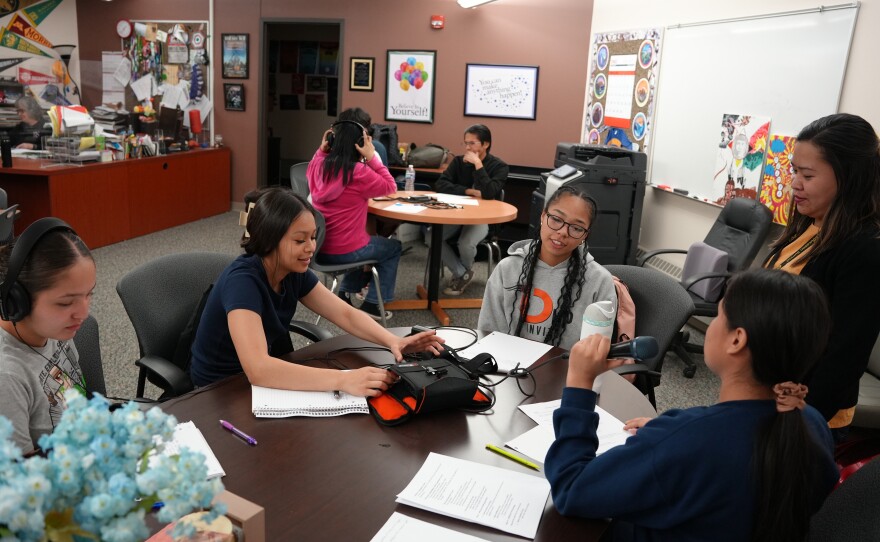
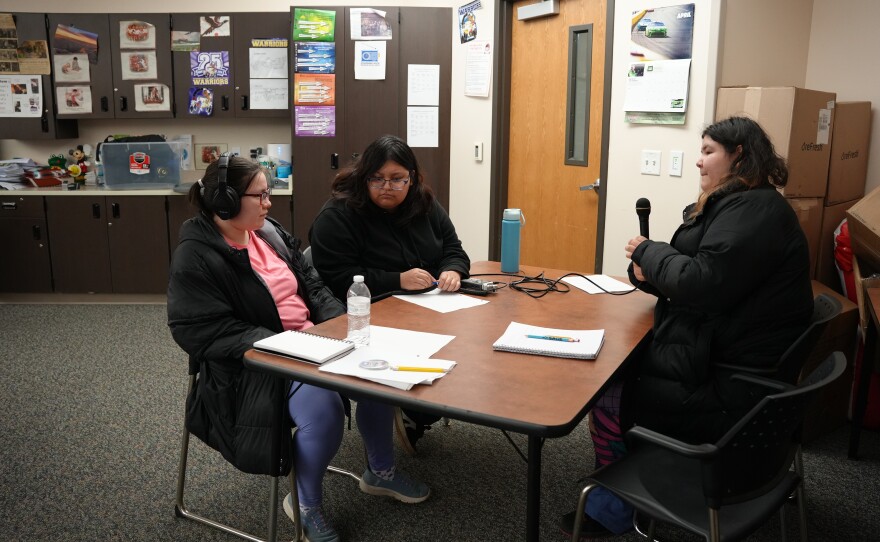
It's ready to record. When you press it again, then it starts recording. And you can see there's a little timestamp here, so you can watch the recording happening.
HOST:
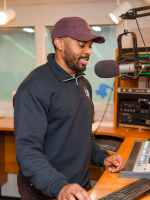
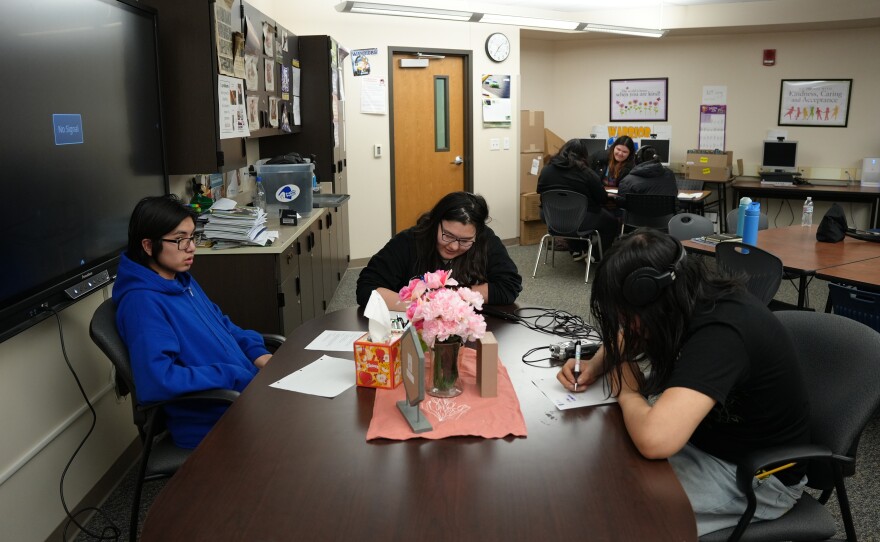
That’s Emily Mihalik, she’s Prairie Public’s Education Coordinator. She was demonstrating how to use the recorder to a group of students who host the Standing Rock Warrior Radio Show on KLND. As for some of the other students, they figured out how to use it on their own.
STUDENTS:
But she is a dingleberry.
HOST:
As the project started rolling, one thing became clear: for many of these students, the question of being American was personal, and tied closely to their history and safety.
TITAN REDHORN (STUDENT):
When I start thinking about being American means probably around middle school, starting to find out when we had like the pipeline problem down here on the reservation and like just how some cops are still acting different to people that are colored and everything. So that kind of gave me the idea of like becoming of a better American for America.
HOST:
Titan Redhorn is a senior at Standing Rock High School and the board operator for the Standing Rock Warrior Radio Show.
He’s referring to the Dakota Access Pipeline protests which brought international attention to Standing Rock nearly a decade ago. Thousands of water protectors gathered here in opposition to the pipeline, arguing it threatened tribal land and the Missouri River water supply.
For many Indigenous families, the protests became more than an environmental issue. They became a question of whether Native voices would be heard at all. And even now, years later, students still point back to that moment when talking about America.
MILEY REDHORN (STUDENT):
Yes. And what made me question it is basically what's happening nowadays. And basically what happened with the whole No DAPL thing that happened at Standing Rock.
HOST:
The pipeline incident came up a few times when questioning what being American means. A dark pitch pooled within the reservation, causing many, even at a young age to question where they fit inside of America.
A land for some that means freedom and opportunity. For others, it’s complicated by history and by present-day fears around discrimination, policing, deportation, and race.
ISABELLA JOHNSON (STUDENT):
I think the perspectives of minorities like Native Americans and African Americans and women are often left out of American stories.
HOST:
Students spoke about Native history being minimized in classrooms. About colonization. Residential schools. Racism. And the feeling that some communities are still fighting to be fully seen as American, even while living on land their ancestors occupied long before the country existed.
Alongside frustration, many of the students still described America through ideals like freedom, equality, safety, belonging. Not necessarily as things already achieved but ideals still worth reaching for.
CAMIMILA ARCHAMBAULT (STUDENT):
What does American, being American mean to me? To me, it means to have freedom, like being able to speak, walk, talk, do stuff freely, no matter our ethnicity or the ways we grew up.
HOST:
For these students, the American identity is a battle between ideals and reality and between history and who gets remembered inside of it. These conversations beg the question: when your history and culture has been rewritten and silenced, how does one continue to have hope in the American future?
NUPAN HALSANA (STUDENT):
I feel like what gives me hope is me and my peers because we're going to make America pop again.
MILEY REDHORN (STUDENT):
All the new graduates that are coming and high schoolers that will make something in the future.
ISABELLA JOHNSON (STUDENT):
I want to be a part of America that celebrates all kinds of people and everybody's equal and feels like they belong.
HOST:
Since the founding of the American constitution, the defense for truth, liberty, and equality has been an agreement between the people and the government but the weight of the responsibility falls on the people.
The young. The old. Native. Black. White. Hispanic. We the people are that hope.
Sure, one administration may change the language. Another changes several policies. Some alter the rhetoric. Others sharpen it.
But they can all be undone… because freedom. Liberty. And equality. At times imperfectly practiced is at the heart of being American. Living in classrooms and communities like Standing Rock, where the next generation is still deciding what this country will become.
For Prairie Public, I’m Tay Calloway.